
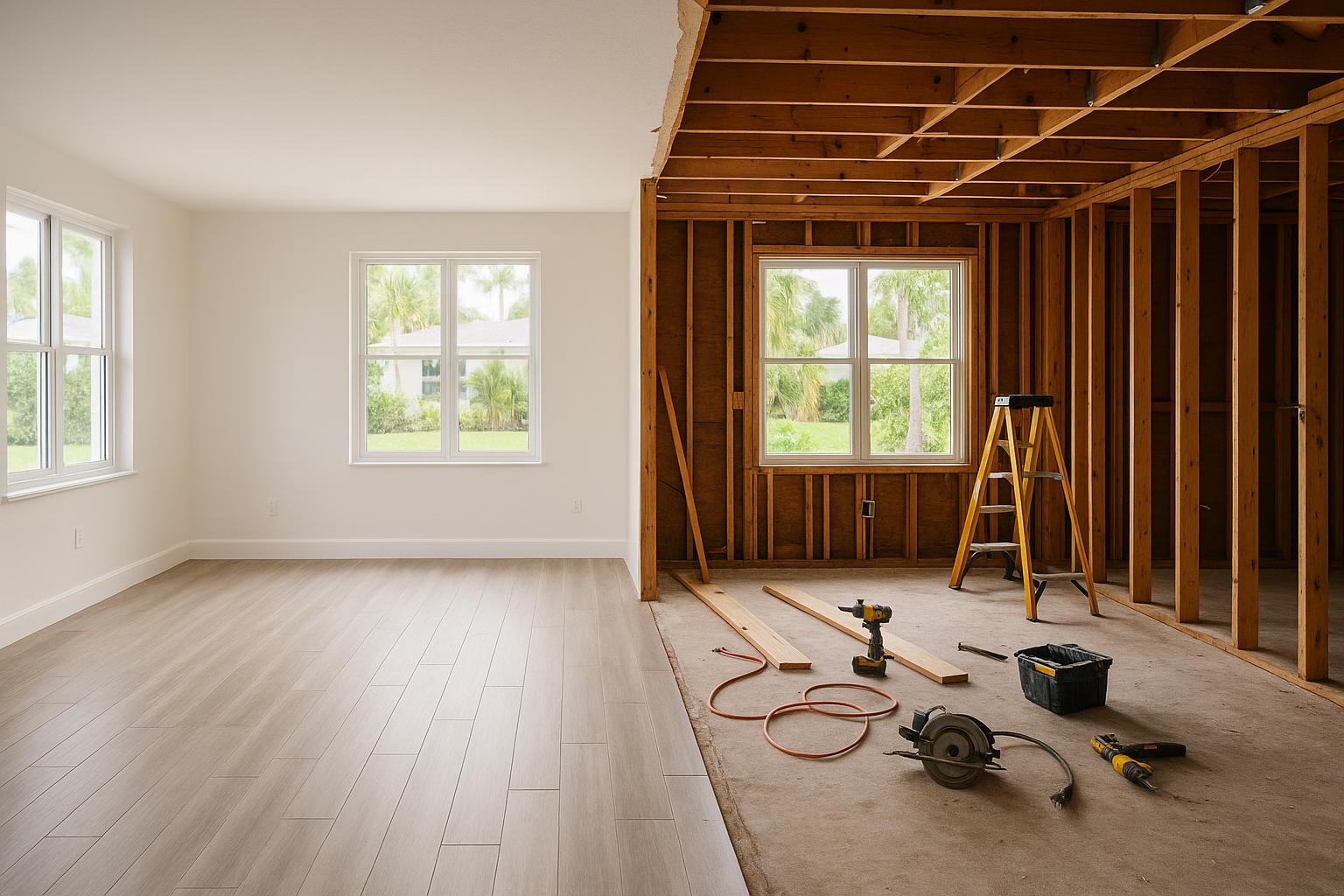
Why Whole-Home Renovations Feel So Overwhelming
You love your home's location. Maybe you're steps from Hollywood Beach, or you've got a great neighborhood with mature trees and friendly neighbors. But the house itself? It needs work — not just a fresh coat of paint, but a complete transformation. New kitchen, updated bathrooms, better flooring, maybe even a reconfigured layout.
A whole-home renovation is exciting, but it's also one of the most complex projects a homeowner can take on. Unlike a single-room remodel, you're coordinating multiple trades, managing a larger budget, and often living through the construction or arranging temporary housing. Without a solid plan, things can spiral quickly.
The good news? With the right approach and the right contractor, a whole-home renovation doesn't have to be a nightmare. Here's how to plan yours from start to finish.
Step 1: Define Your Goals Before You Pick Up a Hammer
Before you start browsing tile samples or dreaming about open floor plans, sit down and clarify what you actually want from this renovation. Ask yourself:
- Are you renovating to sell? If so, focus on updates that boost resale value — kitchens, bathrooms, and flooring tend to deliver the best return in the Hollywood real estate market.
- Are you renovating to stay? Then prioritize the things that will improve your daily life, even if they're not the flashiest upgrades.
- What's non-negotiable vs. nice-to-have? Create two lists. This will save you when budget decisions get tough later.
Having clear goals gives your contractor a roadmap and prevents the dreaded scope creep — where small additions pile up and blow your timeline and budget apart.
Step 2: Set a Realistic Budget (and Build in a Buffer)
Budgeting for a whole-home renovation is where most homeowners stumble. They either underestimate costs or forget to account for the surprises that inevitably come with older homes — especially in South Florida, where humidity, aging plumbing, and outdated electrical systems can hide behind walls.
Here's a practical framework:
- Get a professional estimate. A reputable contractor will walk through your home and provide a detailed scope of work with pricing. Don't rely on online calculators alone — they can't account for local labor costs, permit requirements, or the specific condition of your property.
- Add a 15-20% contingency fund. This isn't pessimism; it's realism. When you open up walls in a home built in the 1960s or 70s — which many Hollywood homes were — you may find outdated wiring, water damage, or code issues that need to be addressed.
- Prioritize your spending. Put the most money into the areas you'll use the most. A stunning kitchen you cook in every night is a better investment than a guest bathroom that gets used twice a year.
Step 3: Choose the Right Contractor for the Job
A whole-home renovation isn't a weekend DIY project. You need a general contractor who can manage the full scope — coordinating electricians, plumbers, painters, flooring installers, and inspectors so the work flows in the right order.
When evaluating contractors in Hollywood and the surrounding areas, look for:
- Proper licensing and insurance. In Florida, general contractors must hold a state-certified or registered license. Verify it through the Florida Department of Business and Professional Regulation.
- Experience with projects similar to yours. Ask to see photos or visit completed renovations. A contractor who primarily does small bathroom updates may not be equipped to manage a full-home project.
- Clear communication style. You'll be working with this team for weeks or months. If they're hard to reach during the estimate phase, that's a red flag for how the project will go.
- Detailed written contracts. Your agreement should spell out the scope, timeline, payment schedule, and how change orders are handled.
Step 4: Understand the Permit Process
One thing many homeowners don't realize is that most renovation work in Hollywood requires permits from the City of Hollywood Building Division. This includes electrical work, plumbing changes, structural modifications, and sometimes even significant cosmetic updates that affect load-bearing walls.
Skipping permits might seem like a way to save time and money, but it can create serious problems down the road — especially when you try to sell your home or file an insurance claim. A good contractor handles the permitting process for you, ensuring everything is done to code and properly inspected.
Step 5: Plan for Where You'll Live During Construction
This is the question nobody wants to think about, but it matters. Can you live in your home during a whole-home renovation? Sometimes yes, sometimes no. It depends on the scope of work.
If the renovation is phased — say, the kitchen and living areas first, then bedrooms and bathrooms — you may be able to stay in the home with some inconvenience. But if the work involves major plumbing or electrical overhauls, you might need to stay elsewhere for a period of time.
Discuss this with your contractor early. They can often structure the project timeline to minimize disruption, especially if they know upfront that you plan to stay in the home.
Step 6: Make Material Selections Early
One of the biggest causes of renovation delays isn't labor — it's materials. Cabinets, countertops, specialty tile, and custom fixtures can have lead times of four to eight weeks or more. If you wait until demolition is done to start shopping, your project will stall.
Start selecting materials as soon as your project scope is finalized. Your contractor or a design consultant can help you make choices that fit your budget and aesthetic while keeping the timeline on track.
Step 7: Communicate Consistently Throughout the Project
The best renovations happen when homeowners and contractors stay in regular communication. Establish a rhythm — whether it's a weekly walkthrough, a daily text update, or a shared project management app. This keeps everyone aligned and allows small issues to be resolved before they become big problems.
At Horizon General Contractors, we've found that straightforward, honest communication is the single biggest factor in a successful renovation. When homeowners know what's happening and why, the entire experience feels less stressful — even when unexpected challenges arise.
Your Home Deserves a Thoughtful Renovation
A whole-home renovation is a significant investment, but it's also an opportunity to create a space that truly fits your life. Whether you're updating a mid-century ranch in Hollywood or modernizing a home in Pembroke Pines or Fort Lauderdale, the key is planning thoroughly, choosing the right team, and staying engaged throughout the process.
If you're considering a whole-home renovation and want to talk through your options, reach out to Horizon General Contractors. We'll walk through your home, listen to your goals, and give you an honest assessment of what it will take to bring your vision to life.